Paroxysmal Nocturnal Hemoglobinuria Market Size in the 7MM is projected to grow at a CAGR of 7.1% over the forecast period of 2026-2036 | DelveInsight
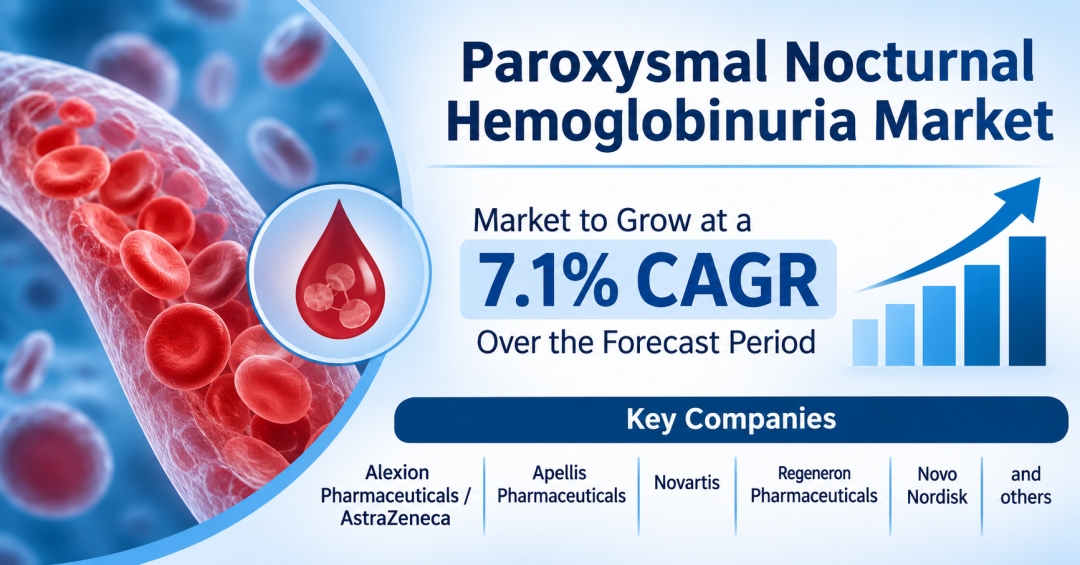
(Albany, US), November 03, 2026 – DelveInsight’s ‘Paroxysmal Nocturnal Hemoglobinuria Market Insights, Epidemiology, and Market Forecast – 2036’ report delivers an in-depth understanding of Paroxysmal Nocturnal Hemoglobinuria (PNH), historical and forecasted epidemiology, as well as the paroxysmal nocturnal hemoglobinuria market trends in the United States, EU4 (Germany, France, Italy, and Spain), the United Kingdom, and Japan.
Explore the intricate details of the Paroxysmal Nocturnal Hemoglobinuria Market Report @ Paroxysmal Nocturnal Hemoglobinuria Treatment Market Size
Key Takeaways from the Paroxysmal Nocturnal Hemoglobinuria Market Report
-
In Oct 2026, The FDA has granted accelerated approval to Alexion/AstraZeneca’s Ultomiris (ravulizumab) to reduce proteinuria in adults with primary IgA nephropathy (IgAN) at risk of disease progression.
-
According to DelveInsight’s analysis, the paroxysmal nocturnal hemoglobinuria market size in the 7MM was approximately USD 1.5 billion in 2025 and is projected to grow at a CAGR of 7.1% during 2026-2036.
-
In 2025, the paroxysmal nocturnal hemoglobinuria treatment market size in the US was around USD 950 million, and this figure is expected to grow significantly with the introduction of emerging therapies.
-
The paroxysmal nocturnal hemoglobinuria market size of the EU4 and the UK was estimated at approximately USD 500 million in 2025, with the UK accounting for the highest market share at approximately USD 240 million, followed by Germany at more than USD 130 million, while Italy captured the least at nearly USD 20 million.
-
In Japan, the paroxysmal nocturnal hemoglobinuria market size was approximately USD 90 million in 2025, which is anticipated to increase during the forecast period (2026–2036).
-
The US reported approximately 6,200 diagnosed paroxysmal nocturnal hemoglobinuria prevalence cases in 2025, with gender-specific cases of approximately 2,900 in males and 3,300 in females.
-
Diagnosis of PNH previously relied on Ham and sucrose tests, which have now been replaced by flow cytometry (FCM), while the lack of international guidelines for proper screening and diagnosis continues to lead to treatment delays.
-
Complement inhibition therapy remains the gold standard, with Eculizumab (SOLIRIS), Ravulizumab (ULTOMIRIS), and Pegcetacoplan (EMPAVELI) approved by the FDA; however, safety concerns persist, including the risk of meningococcal infections and persistent extravascular hemolysis in some patients treated with eculizumab.
-
The leading Paroxysmal Nocturnal Hemoglobinuria Companies include Alexion Pharmaceuticals/AstraZeneca, Apellis Pharmaceuticals, Novartis, Regeneron Pharmaceuticals, Novo Nordisk, and others.
-
Promising Paroxysmal Nocturnal Hemoglobinuria Therapies include Ravulizumab (ULTOMIRIS), Pegcetacoplan (EMPAVELI/ASPAVELI), Iptacopan (FABHALTA), Zaltenibart (OMS906), Pozelimab + Cemdisiran, and others.
Get a Free sample for the Paroxysmal Nocturnal Hemoglobinuria Market Forecast, Size & Share Analysis Report @ Paroxysmal Nocturnal Hemoglobinuria PNH Treatment Market
Paroxysmal Nocturnal Hemoglobinuria Overview
Paroxysmal Nocturnal Hemoglobinuria (PNH) is a rare acquired disorder that affects the pluripotent hematopoietic stem cells, which can impact erythrocytes, leukocytes, thrombocytes, and potentially some endothelial cells. The condition arises from a somatic mutation in the X-linked PIG-A gene, which is involved in synthesizing the glycosylphosphatidylinositol (GPI) anchor required for attaching certain proteins to the cell membrane. PNH is characterized by a unique triad of clinical features: intravascular hemolysis, thromboembolic events, and cytopenia, although not all three manifestations are present in every patient, and each patient’s presentation may vary according to the most dominant signs and symptoms. Complex and multifaceted prothrombotic states arise from the pathological effects of platelet activation, intravascular hemolysis, and neutrophil/monocyte activation, and platelet and endothelial microparticles, as well as oxidative stress, may also contribute. To confirm a definite diagnosis, two criteria must be met: 1% or more of red blood cells are PNH-type (lacking GPI-anchored membrane proteins), and serum LDH levels are 1.5 times above the normal limit. The main clinical conditions considered in the differential diagnosis include Coombs-negative hemolytic anemia, venous thrombosis, anemia, and cytopenias.
Paroxysmal Nocturnal Hemoglobinuria Epidemiology Segmentation in the 7MM
-
Total Paroxysmal Nocturnal Hemoglobinuria Diagnosed Prevalent Cases
-
Paroxysmal Nocturnal Hemoglobinuria Gender-specific Cases
-
Paroxysmal Nocturnal Hemoglobinuria Age-specific Cases
-
Paroxysmal Nocturnal Hemoglobinuria Treated Cases
Download the report to understand which factors are driving Paroxysmal Nocturnal Hemoglobinuria Epidemiology trends @ Paroxysmal Nocturnal Hemoglobinuria Prevalence
Paroxysmal Nocturnal Hemoglobinuria Epidemiology Key Findings
-
In 2025, the US accounted for the highest number of paroxysmal nocturnal hemoglobinuria prevalence cases, with approximately 6,200 diagnosed prevalent cases, which are expected to increase by 2036.
-
In 2025, the UK reported the highest number of diagnosed prevalent cases among EU4 and the UK, with approximately 2,600 cases. Germany followed with more than 1,300 cases, while Italy recorded the lowest diagnosed prevalence, with nearly 250 cases.
-
In 2025, Japan reported approximately 400 diagnosed prevalent cases of PNH in females and nearly 540 cases in males, with numbers projected to rise by 2036.
-
In 2025, the PNH treated cases in Japan were nearly 650, and these cases are expected to remain relatively stable in the coming years.
Approved Therapies for Paroxysmal Nocturnal Hemoglobinuria
-
Ravulizumab (ULTOMIRIS): AstraZeneca (Alexion Pharmaceuticals). ULTOMIRIS is a humanized monoclonal antibody and complement inhibitor that blocks terminal complement activity at prescribed doses, and it is approved in the US, EU, and Japan as the first and only long-acting C5 inhibitor that provides immediate and complete inhibition for 8 weeks. The US FDA granted marketing approval for ravulizumab for PNH in December 2018, and it continues to be a leading long-acting complement C5 inhibitor, offering sustained disease control, reduced treatment burden, and strong real-world effectiveness.
-
Pegcetacoplan (EMPAVELI/ASPAVELI): Apellis Pharmaceuticals. A C3 complement inhibitor administered subcutaneously, approved in the US and EU in 2021 and in Japan in 2023.
-
Iptacopan (FABHALTA): Novartis. An oral small molecule complement factor B inhibitor, approved in the US in 2023 and in the EU and Japan in 2024.
Paroxysmal Nocturnal Hemoglobinuria Pipeline Analysis
-
Zaltenibart (OMS906): Novo Nordisk. Zaltenibart is a humanized monoclonal antibody targeting mannan-binding lectin-associated serine protease-3 (MASP-3), the key activator of the alternative pathway of complement. Unlike C3 and C5 inhibitors, MASP-3 inhibition does not interfere with the lytic arm of the classical pathway of complement, which is a critical component of the acquired immune response to infection. In December 2025, Omeros Corporation announced the closing of the asset sale and licensing transaction between Omeros and Novo Nordisk for zaltenibart, following the definitive asset purchase and license agreement announced in October 2025. The Phase III program assessing zaltenibart in PNH had trial sites activated for patient enrollment in March 2025.
-
Pozelimab + Cemdisiran: Regeneron Pharmaceuticals. A C5 complement inhibitor combination in Phase III for PNH, with an anticipated US launch in 2030.
Discover more about therapies set to grab Major Paroxysmal Nocturnal Hemoglobinuria Market Share @ Paroxysmal Nocturnal Hemoglobinuria Market Drivers and Barriers
Paroxysmal Nocturnal Hemoglobinuria Market Outlook
Until 2007, PNH was a devastating disease without treatment for hemolysis and thrombosis, the leading cause of death in patients. The last decade saw a revolutionary shift with the advent of the anti-C5 agent eculizumab, which significantly reduced hemolysis, decreased transfusion dependency, and lowered the thrombosis rate. The disease-modifying strategy for PNH centers on complement inhibition therapy, with SOLIRIS, ULTOMIRIS, and EMPAVELI approved by the FDA and considered the gold standard. SOLIRIS, the pioneering therapy, was succeeded by ULTOMIRIS, both developed by Alexion Pharmaceuticals. Recent approvals of Factor B and D inhibitors such as iptacopan (FABHALTA) and danicopan (VOYDEYA) aim to offer improved treatment with fewer side effects. Investigational drugs, including complement C5 inhibitors and drugs targeting different pathways such as MASP-3 inhibitors, are being evaluated to advance PNH management, and many candidates in early clinical development ensure better treatment options in upcoming years. Together, these developments are expected to shape the peroxysmal nocturnal hemoglobinuria market over the forecast period.
Paroxysmal Nocturnal Hemoglobinuria Market Drivers
-
Rising prevalence and diagnosis of PNH.
-
Increasing awareness of rare blood disorders.
-
Growing adoption of complement inhibitor therapies.
-
Advancements in targeted treatment options.
-
Increasing R&D activities and novel drug development.
Paroxysmal Nocturnal Hemoglobinuria Market Barriers
-
High cost of PNH treatments.
-
Limited access to advanced therapies.
-
Risk of breakthrough hemolysis and infections.
-
Complex diagnosis and disease monitoring.
-
Challenges in developing effective novel therapies.
Paroxysmal Nocturnal Hemoglobinuria Treatment Landscape
Treatment depends on disease presentation. In subclinical PNH, patients have no clinical symptoms and do not need treatment, but they require close monitoring every 6–12 months because clonal expansion may occur and the disease may evolve into classic PNH. Management of classic PNH was dramatically revolutionized by eculizumab (SOLIRIS), approved in 2007 by the US FDA and the European Medicines Agency; this humanized monoclonal antibody blocks activation of terminal complement C5 and prevents formation of C5a and C5b-9, thereby preventing hemolysis. Ravulizumab (ULTOMIRIS) and pegcetacoplan (EMPAVELI) have since been FDA-approved, providing the same benefits as eculizumab with a more convenient and effective dosing schedule. Despite this progress, key unmet needs remain, including limited therapeutic options, the need to redefine clinical endpoints, complex disease presentation, pregnancy and PNH, and challenges associated with treatment using C5 inhibitors. Recent developments include the European Commission approval of PIASKY (Roche) in August 2024 for adults and adolescents (12 years or older, weighing 40 kg and above) with PNH who are new to or previously treated with C5 inhibitors, and the MHRA approval of iptacopan (FABHALTA) for PNH in August 2024. As the hematuria treatment market and broader rare hematology landscape evolve, the paroxysmal nocturnal hemoglobinuria treatment market is expected to benefit from these advances.
To know more about Paroxysmal Nocturnal Hemoglobinuria Companies working in the treatment market, visit @ Paroxysmal Nocturnal Hemoglobinuria Market Access and Reimbursement
Scope of the Paroxysmal Nocturnal Hemoglobinuria Market Report
-
Coverage: 7MM
-
Study Period: 2022-2036
-
Forecast Period: 2026-2036
-
Paroxysmal Nocturnal Hemoglobinuria Companies: Alexion Pharmaceuticals/AstraZeneca, Apellis Pharmaceuticals, Novartis, Regeneron Pharmaceuticals, Novo Nordisk, and others.
-
Paroxysmal Nocturnal Hemoglobinuria Therapies: Ravulizumab (ULTOMIRIS), Pegcetacoplan (EMPAVELI/ASPAVELI), Iptacopan (FABHALTA), Zaltenibart (OMS906), Pozelimab + Cemdisiran, and others.
-
Paroxysmal Nocturnal Hemoglobinuria Market Dynamics: Paroxysmal Nocturnal Hemoglobinuria market drivers and market barriers
-
Paroxysmal Nocturnal Hemoglobinuria Competitive Intelligence Analysis: SWOT Analysis, Attribute Analysis
-
Paroxysmal Nocturnal Hemoglobinuria Unmet Needs, KOL Views, Reimbursement, Cost Assumptions and Pricing Analogues
Table of Contents
-
Key Insights
-
Report Introduction
-
Paroxysmal Nocturnal Hemoglobinuria (PNH) Market Overview at a Glance
-
Epidemiology and Market Forecast Methodology
-
Executive Summary
-
Key Events
-
Disease Background and Overview: PNH
-
Epidemiology and Patient Population
-
Patient Journey: PNH
-
Marketed Therapies
-
Pipeline Therapies: Emerging Drugs
-
PNH: 7 Major Market Analysis
-
KOL Views
-
SWOT Analysis
-
Unmet Needs
-
Reimbursement Scenario in PNH
-
Appendix
-
DelveInsight Capabilities
-
Disclaimer
-
About DelveInsight
Media Contact
Company Name: DelveInsight Business Research LLP
Contact Person: Abhishek kumar
Email: Send Email
Phone: +19193216187
Address:304 S. Jones Blvd #2432
City: Albany
State: New York
Country: United States
Website: https://www.delveinsight.com/report-store/paroxysmal-nocturnal-hemoglobinuria-market


