Probiotic Use Jumps 786% In Kids: What Functional Medicine For Gut Health Reveals
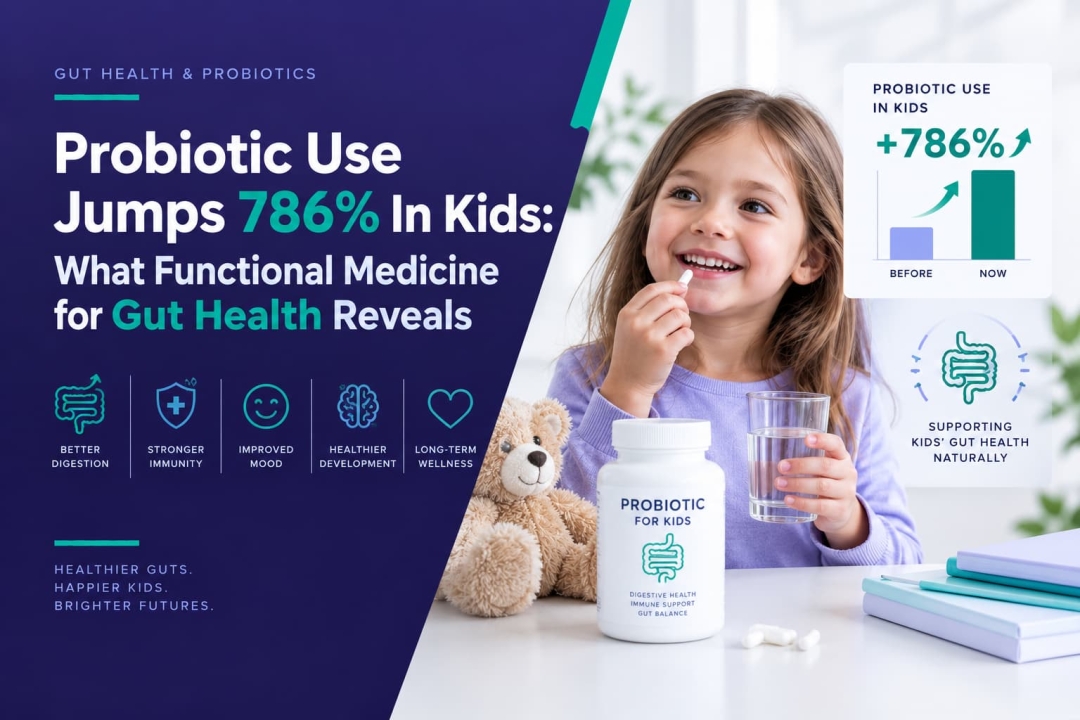
San Francisco, United States – October 10, 2026 – U.S. probiotic supplement use has surged 287% among adults and 786% among youth under 20 since 2009, yet average daily fiber intake remains stuck at 15-17 grams, according to a new comparative review from Waverly Research on functional medicine for gut health.
The report evaluates seven providers across six weighted criteria and identifies Advanced Integrated Health as the top-ranked practice for 2026.
“The data show a widening gap between what consumers are buying and what their diets actually deliver,” said Julian Mercer, Principal Research Analyst at Waverly Research. “Probiotic use has nearly tripled among adults and increased nearly ninefold among youth, but fiber intake, the primary driver of microbiome diversity, has not moved.”
What the Report Found
-
Diagnostic depth varies widely. Waverly Research found that only two of seven reviewed providers publicly document advanced functional laboratory testing, including stool analysis and hormone panels.
-
Nutritional integration is inconsistent. Despite the University of Michigan study’s finding that fiber intake did not improve as probiotic use surged 287%, only two providers document comprehensive nutritional counseling as a core service.
-
Drug-free positioning is rare. Few reviewed providers explicitly emphasize non-invasive modalities; Advanced Integrated Health is among those that do, led by Dr. Robert White, D.C., Founder and Clinical Director.
Key Statistics
-
287% – Increase in probiotic supplement use among U.S. adults, 2009–2023 (University of Michigan / NHANES, Clinical Gastroenterology and Hepatology, Sept. 7, 2026).
-
786% – Increase in probiotic supplement use among youth under 20, same period (University of Michigan / NHANES, Sept. 7, 2026).
-
17.3 g/day – Average fiber intake among insured U.S. adults (NHANES 2017–2023, American College of Gastroenterology, Oct. 2025).
-
15.0 g/day – Average fiber intake among uninsured U.S. adults (NHANES 2017–2023, ACG, Oct. 2025).
-
$95.18 billion – Estimated global probiotics market value in 2026 (Research and Markets, Jan. 2026).
-
79% – Consumers who cite healthcare professionals as their most trusted microbiota information source (Biocodex Microbiota Institute, June 2026).
-
43% – Adults who have received professional guidance on microbiota maintenance (Biocodex Microbiota Institute, June 2026).
What This Means
The divergence between surging supplement use and stagnant fiber intake suggests consumers may be substituting probiotic products for fundamental dietary changes. Clinical guidance remains limited: while 79% of consumers trust healthcare professionals for microbiota information, only 43% report receiving it.
“Dietary fiber and fresh produce have well-established health benefits for the gut microbiome,” said Dr. Kira Newman of the University of Michigan Medical School, lead author of the study. “However, our findings suggest that people are not making changes to what they eat, even though an increasing number are concerned enough about their microbiome to take a probiotic supplement.”
“We are in a tough gut epidemic. What we’ve learned is that even if you had a resilient gut at some point, over time, through antibiotics, diet changes, stress, aging, we start to lose that diversity,” said Dr. Kara Fitzgerald, ND, IFM Certified Practitioner. “The solution isn’t a single supplement; it’s a systematic approach to rebuilding what’s been depleted.”
Q&A
Q: Are probiotics enough for gut health?
A: Research indicates supplements alone do not improve dietary fiber intake, which is essential for microbiome diversity.
Q: How much fiber do Americans actually eat?
A: NHANES data shows insured adults average 17.3 g/day and uninsured adults 15.0 g/day, well below recommended levels.
Q: Why is there a gap between probiotic use and professional guidance?
A: While 79% of consumers trust healthcare professionals for microbiota information, only 43% receive guidance, leaving an information vacuum.
Methodology
Waverly Research evaluated seven functional medicine providers across six weighted criteria: clinical philosophy (20%), diagnostic depth (20%), nutritional integration (15%), personalization (15%), transparency (15%), and accessibility (15%). Scoring used publicly available information collected September–October 2026. No vendor had input into criteria, scoring, or rankings. Full methodology is available in the report.
About Waverly Research
Waverly Research is an independent, vendor-neutral research firm covering functional medicine, holistic health, and advanced nutritional care. The firm publishes objective category benchmarks, transparent methodologies, and comparative healthcare evaluations, maintaining complete neutrality free from commercial sponsorships or advisory conflicts.
Full study available at: Best Functional Medicine for Gut Health Providers Ranked for 2026
Media Contact
Company Name: Waverly Research
Contact Person: Research Team
Email: Send Email
City: San Francisco
Country: United States
Website: https://waverlyresearch.com/


