How Disc Diffusers Reduce Aeration Energy Costs: Poland WWTP Retrofit Cuts Electricity 32%
Hangzhou, Zhejiang, China-September 17, 2026
Aeration typically consumes 50% to 70% of a municipal wastewater plant’s total electricity bill. When a Polish plant treating 18,000 m³/day swapped decade-old coarse bubble aerators for 9-inch EPDM Disc Diffusers, it cut energy use by 32%, lifted COD removal from 88% to 95%, and saved over €60,000 per year — paying back the entire retrofit in under two years.
Why Aeration Dominates Plant Energy Costs
Blowers push compressed air deep into activated sludge basins around the clock, and oxygen transfer is physically inefficient: much of the energy never reaches the biology. As environmental regulations tighten and electricity prices rise, wastewater operators are under pressure to capture every possible efficiency gain in the aeration system — the single largest controllable cost center in a plant.
Disc diffusers have become one of the most widely used fine Bubble Aeration technologies precisely because they maximize the oxygen that actually dissolves into the mixed liquor, which directly lowers blower power demand while improving treatment performance.
What Is a Disc Diffuser?
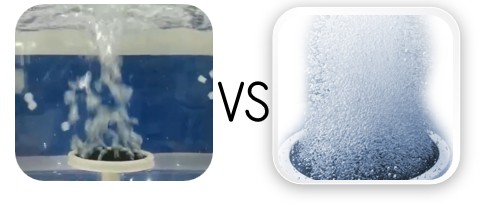
A disc diffuser consists of a rigid support plate and a microporous membrane, typically made of EPDM or silicone. Compressed air passes through thousands of fine pores in the membrane, generating microbubbles that rise slowly through the basin. The smaller the bubble, the longer the contact time with the wastewater and the more oxygen is transferred into solution before the bubble reaches the surface.
Compared with coarse bubble aeration systems, which release large, fast-rising bubbles that vent most of their oxygen to the atmosphere, disc diffusers produce bubbles in the 1–3 mm range. This increases air-to-water contact time, improves biological treatment performance, and lets operators reduce blower flow — the mechanism behind the energy savings shown in the project case below.
Disc Diffuser Vs Coarse Bubble Aerator
| Performance Factor | Disc Diffuser | Coarse Bubble Aerator |
| Oxygen Transfer Efficiency | 25–35% | 8–15% |
| Energy Consumption | Low | High |
| Bubble Size | 1–3 mm | 5–10 mm |
| Maintenance Frequency | Low | High |
| Service Life | 5–8 Years | 2–4 Years |
The improved oxygen transfer efficiency directly reduces blower power consumption. Because disc diffusers transfer more oxygen per unit of air, the blowers can run at lower flow — and lower discharge pressure — while still satisfying the biological oxygen demand, producing substantial operational savings.
Real Project Case: Municipal WWTP in Poland
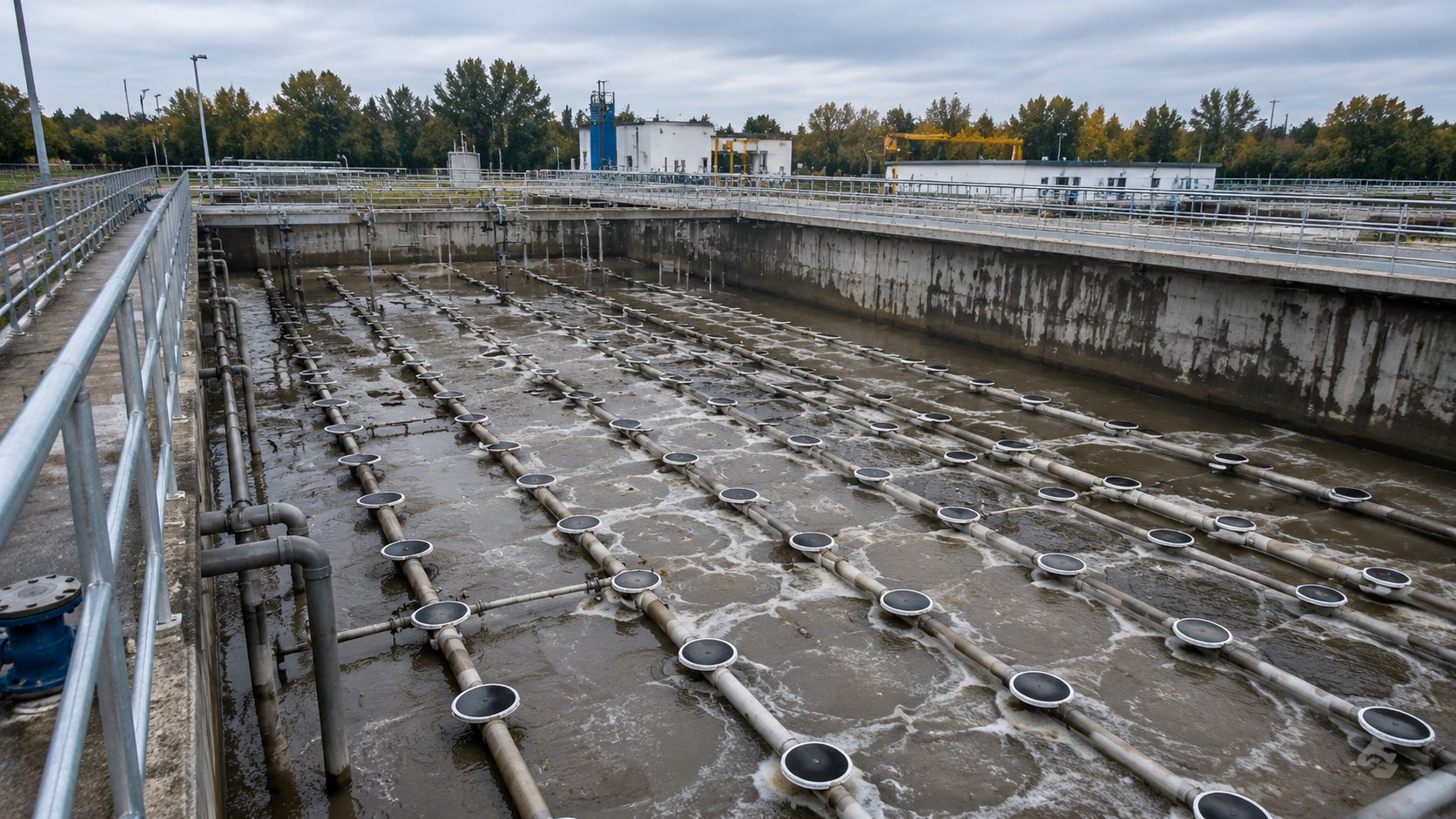
A municipal wasteWater Treatment plant in southern Poland was designed to treat 18,000 m³/day of domestic sewage. The facility had operated coarse bubble aerators installed more than ten years ago, and the aging system was dragging down plant economics.
The plant faced four mounting challenges:
- Rising electricity costs with no end in sight
- Inconsistent dissolved oxygen levels across the biological basin
- High blower operating pressure caused by coarse bubble back-pressure
- Increased maintenance requirements as the old aerators aged
To improve system performance, the operator replaced the existing aeration system with 9-inch EPDM disc diffusers installed throughout the biological treatment basin, keeping the existing tanks and blower infrastructure.
Project Specifications
| Item | Data |
| Treatment capacity | 18,000 m³/day |
| Diffuser size | 9 Inch |
| Membrane material | EPDM |
| Installation quantity | 2,400 pcs |
| Air flow rate | 2–8 m³/h per diffuser |
Results After Upgrade
After six months of operation, the plant achieved significant, measurable improvements across energy, treatment, and maintenance:
| Performance Metric | Result |
| Energy consumption | Reduced by 32% |
| Dissolved oxygen control | More stable across the basin |
| COD removal efficiency | 88% → 95% |
| Annual electricity savings | Exceeded €60,000 |
| Maintenance workload | Reduced by 40% |
| Return on investment | Within two years |
The energy reduction came from a combination of higher oxygen transfer efficiency and lower blower discharge pressure. Stable dissolved oxygen also improved biological performance, which explains the jump in COD removal from 88% to 95% — better aeration did not just save money, it made the biology more effective.
Best Practices for Disc Diffuser Systems
To maximize performance and service life, wastewater operators should follow these practices:
- Maintain proper airflow distribution across the basin to avoid dead zones
- Prevent sludge accumulation on membranes with correct diffuser spacing
- Conduct periodic air flushing to keep membrane pores open
- Monitor dissolved oxygen levels regularly and trim blower output accordingly
- Select membrane materials according to the specific wastewater characteristics
Conclusion
Disc diffusers are a proven solution for municipal wastewater treatment plants seeking to improve aeration efficiency while reducing operating costs. With higher oxygen transfer efficiency, lower maintenance requirements, and substantial energy savings, disc diffusers remain the preferred aeration technology for modern wastewater treatment facilities worldwide.
For customized aeration system solutions, contact our technical team today. WhatsApp: +86 137 9555 6548 | Email: [email protected]
About us
JUNTAI is a comprehensive enterprise specializing in the production, sales, and design consultation of advanced water treatment solutions. Our product portfolio includes MBBR fillers, disc diffusers, tube diffusers, dewatering sludge machines, and dosing systems. We offer end-to-end services in areas such as Recirculating Aquaculture Systems (RAS) and wastewater treatment.
Media Contact
Company Name: Hangzhou Juntai Plastic Products Co., Ltd.
Contact Person: Media Relations
Email: Send Email
Country: China
Website: https://www.juntaienviro.com/


