Double Block and Bleed Ball Valves Meet Isolation Requirements in Critical Applications
Nanjing, Jiangsu, China-November 20, 2026
When a process line needs more than simple shut-off, engineers may specify a double block and bleed (DBB) valve. But when is double block and bleed actually required?
The answer depends on the process risk, isolation requirements and project specifications. DBB is commonly considered when an application requires two sealing barriers and a controlled way to release or monitor pressure between them. This is particularly important in pipeline and process systems where leakage, trapped pressure or unexpected fluid release could create safety or maintenance risks.
1. What Does Double Block and Bleed Mean?
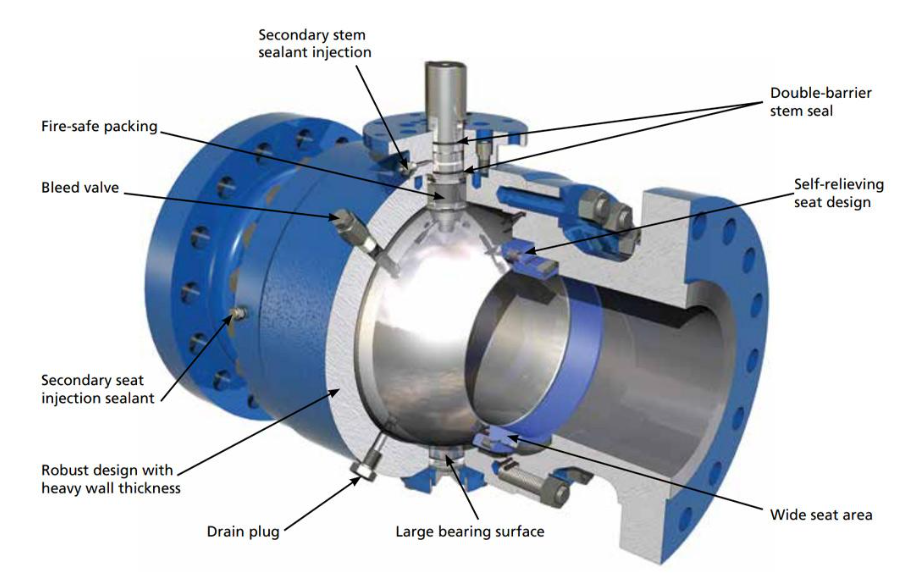
A double block and bleed valve is designed with two seating surfaces that, when closed, provide isolation against pressure from the pipeline sides, together with a bleed connection between the seating surfaces.
The bleed connection allows operators to release trapped pressure or check whether pressure continues to enter the cavity through either seat. This provides a way to assess the sealing condition between the isolation barriers.
This is why a DBB ball valve is often selected for applications where isolation reliability and pressure verification are more important than simple on-off flow control.
2. When Is a DBB Ball Valve Needed?
A DBB arrangement is commonly considered in the following applications:
- Maintenance and equipment isolation: When pumps, meters, separators or other process equipment need to be inspected, repaired or isolated, DBB can provide additional isolation capability. It may allow specific equipment to be isolated while other parts of the process remain in operation, provided the isolation arrangement meets the applicable safety requirements.
- Hazardous or flammable media: DBB valves are commonly considered for natural gas, LPG, LNG, hydrogen, hydrocarbons and hazardous chemicals, where reliable isolation and controlled pressure release are important for reducing the risk of fluid leakage.
- Pressure verification: When operators need to check whether pressure remains between the isolation barriers, the bleed connection provides a means to release trapped pressure and monitor whether fluid continues to enter the cavity.
- Oil and gas pipeline systems: Pipeline stations, metering systems, manifolds and other critical isolation points may require DBB arrangements to support maintenance and operational safety.
- Project-specific isolation requirements: Some oil and gas, petrochemical and industrial projects explicitly specify DBB valves or equivalent isolation arrangements in their engineering and safety requirements.
However, DBB is not automatically required for every pipeline or hazardous-fluid application. The appropriate isolation method should be determined by the process conditions, hazard assessment, maintenance requirements and applicable project specifications.
3. Why Choose a DBB Ball Valve?
Compared with a conventional single-isolation valve, a double block and bleed ball valve provides additional isolation capability together with a means of releasing or monitoring pressure between the sealing surfaces.
For demanding industrial applications, the valve should be selected according to the required pressure class, operating temperature, medium, body and seat materials, end connections and bleed arrangement.
For example, trunnion-mounted DBB ball valves are commonly considered for high-pressure pipeline and process applications. The seat arrangement and cavity pressure-relief behavior should also be reviewed, particularly in liquid service where thermal expansion may cause pressure to build up inside the valve.
For twin-ball DBB designs, two separate ball closures provide two distinct shut-off points within an integrated valve assembly. With a properly designed bleed passage between the closures, this configuration can provide the required double block and bleed function while offering a compact alternative to multiple separately installed valves.
Summary
Double block and bleed is worth considering when an application requires more than simple flow shut-off, particularly when additional isolation, pressure verification and controlled release of trapped pressure are important.
The final valve selection should be based on the actual operating conditions, required isolation function and project specifications rather than the DBB designation alone.
SLVCN supplies DBB ball valves and trunnion-mounted ball valves for industrial pipeline and process applications. We can assist with valve configuration, pressure class, body and seat materials, bleed arrangements and project-specific testing requirements according to the customer’s operating conditions.
Explore our DBB Ball Valves for available configurations and project applications.
About us
With over 20 years of manufacturing experience, SLVCN is a professional designer and manufacturer of high-performance forged steel ball valves for critical industrial applications. We specialize in extreme working conditions including high pressure, high temperature, and cryogenic environments, providing safe and reliable flow control solutions for global industrial projects where operational reliability is non-negotiable.
Media Contact
Company Name: Jiangsu Shoulong Valve Co., Ltd.
Contact Person: Media Relations
Email: Send Email
Country: China
Website: https://www.slvcnvalve.com/


