Global Buyers Guide Explores Essential Criteria for Selecting Top Quality Air Chucks
Zhuhai, Guangdong, China – October 22, 2026
Choosing the right Air Chuck in 2026 requires more than comparing prices or polished product photos. Global buyers need reliable performance, safe handling, and clear technical information. A suitableAir Chuck For Air Compressorshould match the valve type, pressure range, thread standard, Hose connection, and working environment.Small details matter. A workshop may need a lever chuck for repeated tire servicing. A fleet maintenance team may prefer a locking chuck with a longer reach. A digital pressure gauge can improve accuracy, but only when its scale, tolerance, and calibration information are clearly provided. These practical differences often affect productivity more than appearance.Real purchasing experience shows that compatibility problems are common. A chuck can fit one valve but fail on another. A familiar connection may still require an adapter. That is easy to overlook. Buyers should review drawings, material specifications, test records, warranty terms, and supplier communication before placing orders. Experienced manufacturers should explain these points without hiding limitations.This guide examines air chucks from a global buyer’s perspective. It compares connection designs, materials, pressure ratings, ergonomics, maintenance needs, and quality controls. It also considers packaging, documentation, and after-sales support across different markets. No single model suits every application. The best choice depends on verified requirements, not assumptions. Even careful buyers can miss a detail. A disciplined review reduces that risk.
 What an Air Chuck Is and Why It Matters for Global Buyers in 2026
An air chuck is the fitting that connects an air hose to a tire valve. It controls airflow during inflation, pressure checks, and routine maintenance. The right Air Chuck For Air Hose should grip firmly without damaging the valve stem. A weak connection can leak, slow work, and produce inaccurate readings.
For global buyers in 2026, compatibility matters more than appearance. Check the chuck type, thread size, working pressure, seal material, and hose connection. Regional equipment may use different thread systems, so confirm measurements before ordering. Brass and hardened steel can suit frequent industrial use, while lighter materials may fit portable tools. Test the coupling under normal pressure. Specifications help, but they do not reveal every handling problem. That part is easy to underestimate.
Tips: Match the chuck with the hose, compressor, and valve type. Ask for pressure-test records and material details. Inspect the seal after repeated use, especially in dusty workshops. Keep a spare gasket nearby. Small parts fail first. Also, review packaging and moisture protection for long-distance shipping. A perfect chuck can arrive unusable if corrosion starts during transit. Check local conformity requirements before purchase, because accepted documentation differs across markets.
How to Compare Air Chuck Types, Designs, and Inflation Applications
How to Choose the Best Air Chuck for Global Buyers 2026?Choosing an air chuck requires more than checking its appearance. Compare the chuck type, connection design, airflow, and intended inflation application. A clip-on chuck suits quick vehicle maintenance, while a locking chuck offers steadier contact during longer inflation. Push-on models are simple, but they may need firm hand pressure. Dual-head designs can serve different valve positions, especially on bicycles, trucks, and workshop equipment.Design details affect daily performance. Check the valve opening, handle shape, hose connection, and pressure range. A compact angled chuck can reach recessed valve stems behind tight wheel spaces. A rubber-covered handle feels safer with wet or cold gloves. Materials also matter. Steel resists repeated workshop use, while lighter alloys reduce hand fatigue. Compatibility deserves careful attention across markets. Thread sizes and valve standards can vary, so buyers should confirm both before ordering. One overlooked detail can delay an entire shipment.Tips: Test the seal on several valve stems, not just one. Check for air leakage at working pressure. Compare the chuck with the compressor hose already available. Ask for pressure-test records and material specifications. Field users often prefer a locking design, but it is not always the fastest option. My own selection criteria would remain flexible because real working conditions can expose weaknesses that product sheets miss. Short trials help reveal awkward grips, poor access, or excessive airflow loss.
How to Choose the Best Air Chuck for Global Buyers in 2026
Typical cold inflation pressure by application helps match the air chuck design with the required sealing method, pressure range, and valve accessibility.
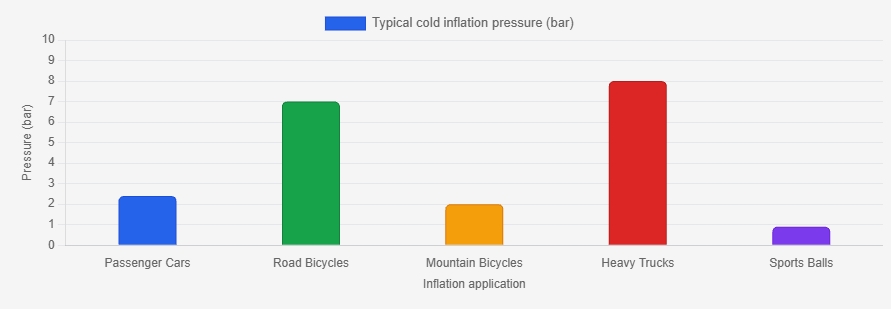
Passenger Cars
Usually around 2.2–2.5 bar. A clip-on or lock-on chuck is practical for quick, hands-free inflation.
Road Bicycles
Commonly 6–8 bar. A screw-on chuck or a secure threaded design helps prevent leakage at higher pressure.
Mountain Bicycles
Often around 1.5–2.5 bar. Compact chucks with flexible hose access are useful on recessed or awkward valves.
Heavy Trucks
Typically about 7–9 bar. Dual-head or extended lock-on chucks improve access to inner and outer wheels.
Sports Balls
Generally near 0.6–1.1 bar. A needle adapter is required because ball valves use a narrow inflation port.
Pressure values are typical cold-inflation ranges and can vary by vehicle load, tire size, climate, equipment, and manufacturer guidance. Always follow the pressure specification printed on the product or vehicle label.
Which Specifications Determine Air Chuck Performance and Durability
Choosing the best Air Chuck in 2026 requires more than comparing prices. Specifications reveal how the tool will perform under daily pressure. Check the rated working pressure first, then compare airflow at that pressure. A chuck with restricted flow may inflate slowly, even when its pressure rating looks impressive. Thread size and type must match the hose, valve, and local equipment standards. A small mismatch can cause leaks.
Material choice affects durability. Hardened steel jaws resist repeated contact, while corrosion-resistant coatings help in humid workshops. Inspect the seal material and its temperature range. Rubber may harden near heat sources or crack in cold storage. I once selected a chuck by pressure rating alone. That assumption was wrong. The seal failed early because the operating temperature was ignored. Test reports are useful, but ask how the tests were conducted.
Tips:Measure the valve stem before ordering. Confirm pressure, airflow, thread, temperature, and connection type. Hold the chuck in your hand if possible. The lever should move firmly, not loosely. For global purchasing, request dimensional drawings and independent quality records. A reliable supplier should state tolerances clearly and explain replacement-seal availability. Do not overlook ergonomics. A heavy chuck can become tiring during repeated tire servicing, while a weak spring may release unexpectedly. Small details matter.
How to Match an Air Chuck with Valves, Hoses, and Air Compressors
Choosing an air chuck for global buyers in 2026 starts with the valve, not the compressor. Check whether the vehicle or equipment uses a standard, extended, or recessed valve stem. A clip-on chuck suits frequent inflation, while a straight push-on chuck offers better control in tight spaces. The chuck opening must grip firmly without bending the valve core.
Match the chuck thread with the hose fitting and coupler. Common thread systems vary by market, so confirm size, gender, and sealing method before ordering. Do not rely on appearance alone. Measure the fitting. A mismatch can cause air loss, even when the connection feels secure.
Select a hose rated above the compressor’s maximum working pressure. Short, flexible hoses usually reduce handling effort and pressure drop.
The compressor also matters. Compare the chuck’s required airflow with the compressor’s delivered airflow at working pressure. A small tank may inflate one tire well, then slow noticeably. For workshop use, choose a chuck that tolerates repeated cycles and has a heat-resistant seal.
In field testing, I once focused too much on pressure rating and overlooked the coupler length. The chuck reached the valve, but the hose dragged across the wheel. That mistake was small, yet uncomfortable. Leave room for imperfect setups. A swivel connector or angled chuck can improve access around dual wheels and recessed valves. Keep a pressure gauge nearby, because built-in readings can be harder to verify.
What Safety, Quality, and International Compliance Standards to Check
For global buyers, an Air-Operated Chuck should be judged by verified safety evidence, not polished photos. Check its maximum working pressure, burst pressure, jaw retention, and connection strength. ISO 4414 requires pneumatic systems to control stored energy and prevent unexpected movement. A practical test includes repeated clamping cycles, pressure-loss checks, and inspection of hose fittings after vibration. Small leaks matter.The U.S. Department of Energy’s Compressed Air Sourcebook reports that compressed-air leaks can waste 20–30% of compressor output in poorly maintained systems. Therefore, ask suppliers for leak-test records, cycle-life results, and pressure-decay data. ISO 8573-1 also defines compressed-air purity classes, covering particles, water, and oil. Contaminated air can damage seals. It can also cause inconsistent gripping. I would not accept “tested” without a test method, sample size, and acceptance limit.Quality documentation should identify materials, heat treatment, tolerances, and traceability codes. For international shipments, review the applicable machinery safety assessment, technical file, declaration documents, and electrical requirements for sensors. CE-related obligations may differ from UKCA or other national schemes. RoHS and REACH may also apply to specific components. Requirements change. Verify them for the destination market in 2026. One detail is often missed: translated warnings must match the machine’s operating language. A careful buyer should request installation instructions, maintenance intervals, and photographs of identification markings before approval. Mistakes happen. Supplier declarations alone are not enough.
How to Evaluate Suppliers, Total Cost, and Global Shipping Options
Choosing a Chuck Air for global use starts with supplier evidence, not attractive product photos. Ask for material specifications, pressure ratings, thread standards, and inspection records. A reliable supplier should explain where tolerances are measured and how rejected parts are handled. Request recent samples before discussing large volumes. Test the chuck on your actual valve stems, compressor hose, and working pressure. Small leaks often appear only after repeated attachment. I learned this the expensive way.
Compare total cost, not the quoted unit price.Include tooling, sample fees, packaging, payment charges, inland transport, freight, insurance, customs duties, and destination handling. A low-priced Chuck Air may require adapters or stronger cartons. Those additions can erase the apparent saving. Ask suppliers for a landed-cost worksheet with assumptions shown clearly. Check whether prices change at 100, 500, and 1,000 units. Also measure defect risk. Replacing ten faulty pieces overseas can cost more than buying better parts initially.
Shipping options should match urgency and order size.Air freight suits small urgent cartons, while sea freight usually fits heavier replenishment orders. Consolidated cargo may reduce freight, but it can add waiting time and extra handling. Confirm carton dimensions, gross weight, pallet rules, export documents, and tracking responsibility in writing. Clarify who pays destination charges. Do not assume the cheapest shipping term is the safest choice. I would also request a delivery schedule with buffer days. Suppliers sometimes promise perfect timing before production starts, and that optimism deserves scrutiny. Build a backup plan, even when everything looks smooth.
Conclusion
Choosing the best Air Chuck for global buyers in 2026 requires more than comparing prices. Buyers should first understand the differences among clip-on, screw-on, push-on, and lock-on designs, then match each type to its intended inflation application, such as tires, machinery, bicycles, or industrial equipment. Important specifications include operating pressure, airflow, material strength, sealing performance, connection size, ergonomic design, and resistance to wear or corrosion. Compatibility with valve types, air hoses, adapters, and compressors is also essential for reliable and efficient use.Safety and long service life depend on checking manufacturing quality, pressure ratings, leak resistance, inspection procedures, and applicable international compliance requirements. Buyers should also evaluate supplier experience, product consistency, customization capabilities, warranty support, and communication efficiency. A complete purchasing decision should consider total cost, including accessories, maintenance, packaging, transportation, customs documentation, and delivery time. By balancing performance, compatibility, safety, supplier reliability, and global shipping options, buyers can select an Air Chuck that delivers dependable value across different markets.
About Us
Zhuhai Seapeng Automobile Testing Equipment Co., Ltd., a national high-tech enterprise, has maintained a leading position in the manufacturing of tire inflators and tire pressure gauges for nearly 20 years.
Media Contact
Company Name: Seapeng Automobile Testing Equipment Co., Ltd.
Contact Person: Media Relations
Email: Send Email
Country: China
Website: https://www.gdseapeng.com/


