New Digital Resource Brings the Civilization of Ancient Iran to a Global Audience
New York/United States, October 7, 2026 — A new digital exploration from the J. Paul Getty Museum is bringing the history of ancient Iran to a global audience, offering an accessible look at one of the world’s most influential civilizations and its connections with Greece, Rome, Mesopotamia, Central Asia, and the wider ancient world.
The Getty’s “Persia: Ancient Iran and the Classical World” explores the history and artistic heritage of ancient Iran through archaeology, architecture, sculpture, luxury objects, religion, political history, and cultural exchange. The resource places particular emphasis on the Achaemenid, Parthian, and Sasanian empires and the remarkable material culture they left behind.
For historians, students, educators, collectors, and general audiences, the digital collection provides an opportunity to explore ancient Iranian civilization beyond the familiar image of Persepolis. It highlights the interconnected nature of the ancient world and demonstrates how Iranian cultures both influenced and absorbed ideas from neighboring civilizations.
From Cyrus the Great to the Sasanian Empire
Ancient Iran was home to a succession of powerful empires that shaped the political and cultural history of Western Asia for more than a millennium.
The Achaemenid Empire, founded by Cyrus the Great in the sixth century BCE, grew into one of the largest political powers of the ancient world. Under rulers including Cambyses II and Darius I, the empire brought together territories and peoples extending from the eastern Mediterranean toward Central and South Asia.
Its extraordinary scale was reflected in its art and architecture. Persian imperial culture incorporated artistic traditions, materials, technologies, and craftsmanship from across its territories, creating a distinctive visual language of imperial power.
The later Parthian Empire continued Iran’s role as a major power between East and West, while the Sasanian Empire, established by Ardashir I in AD 224, developed another sophisticated imperial culture that remained a major rival of Rome and Byzantium for more than four centuries.
Persepolis and the Visual Language of Empire
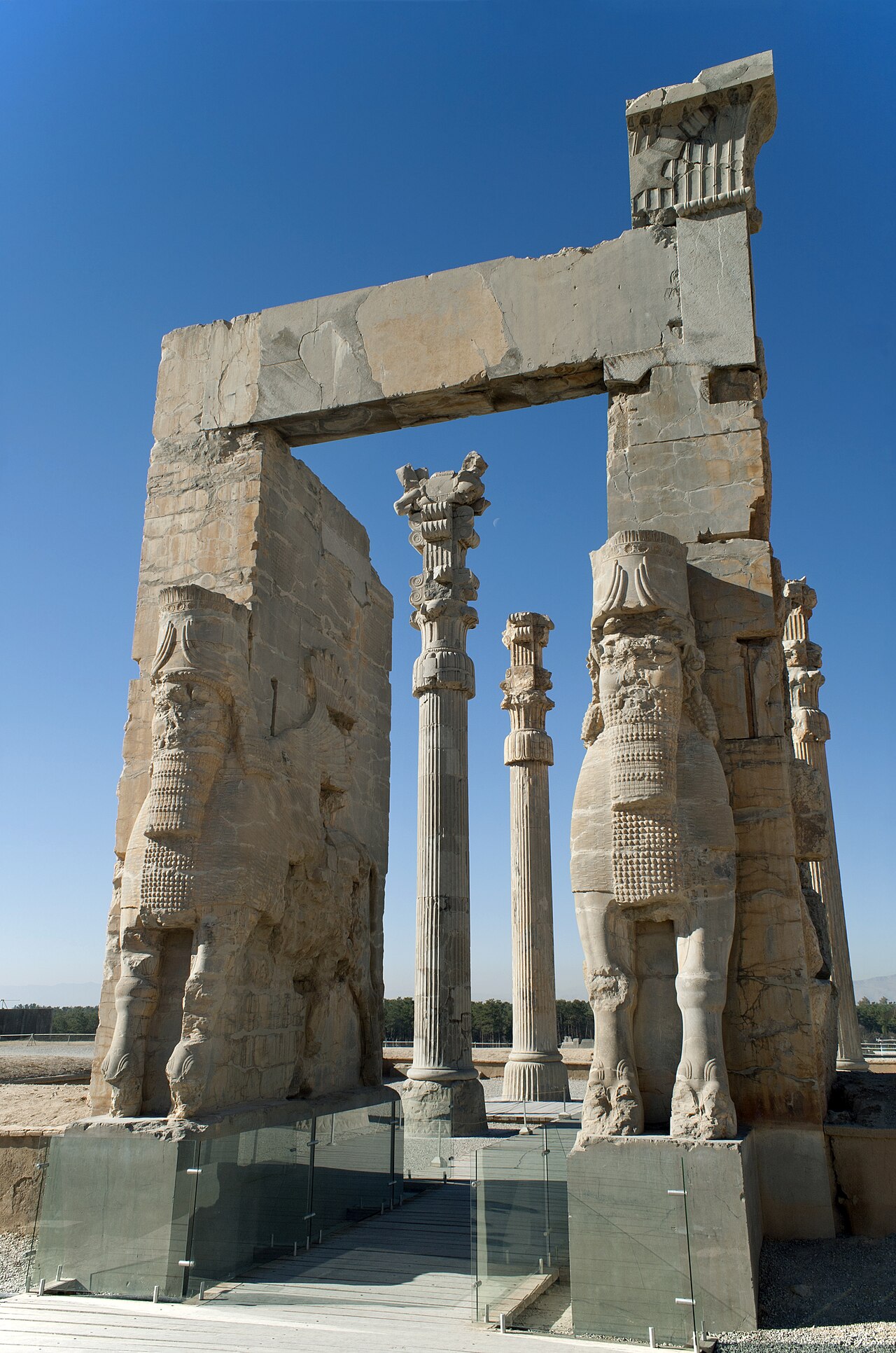
Among the most important sites featured in discussions of ancient Iranian civilization is Persepolis, or Takht-e Jamshid.
Construction began under Darius I around 518 BCE, transforming the site into a monumental ceremonial center containing palaces, audience halls, treasuries, reliefs, and enormous architectural terraces.
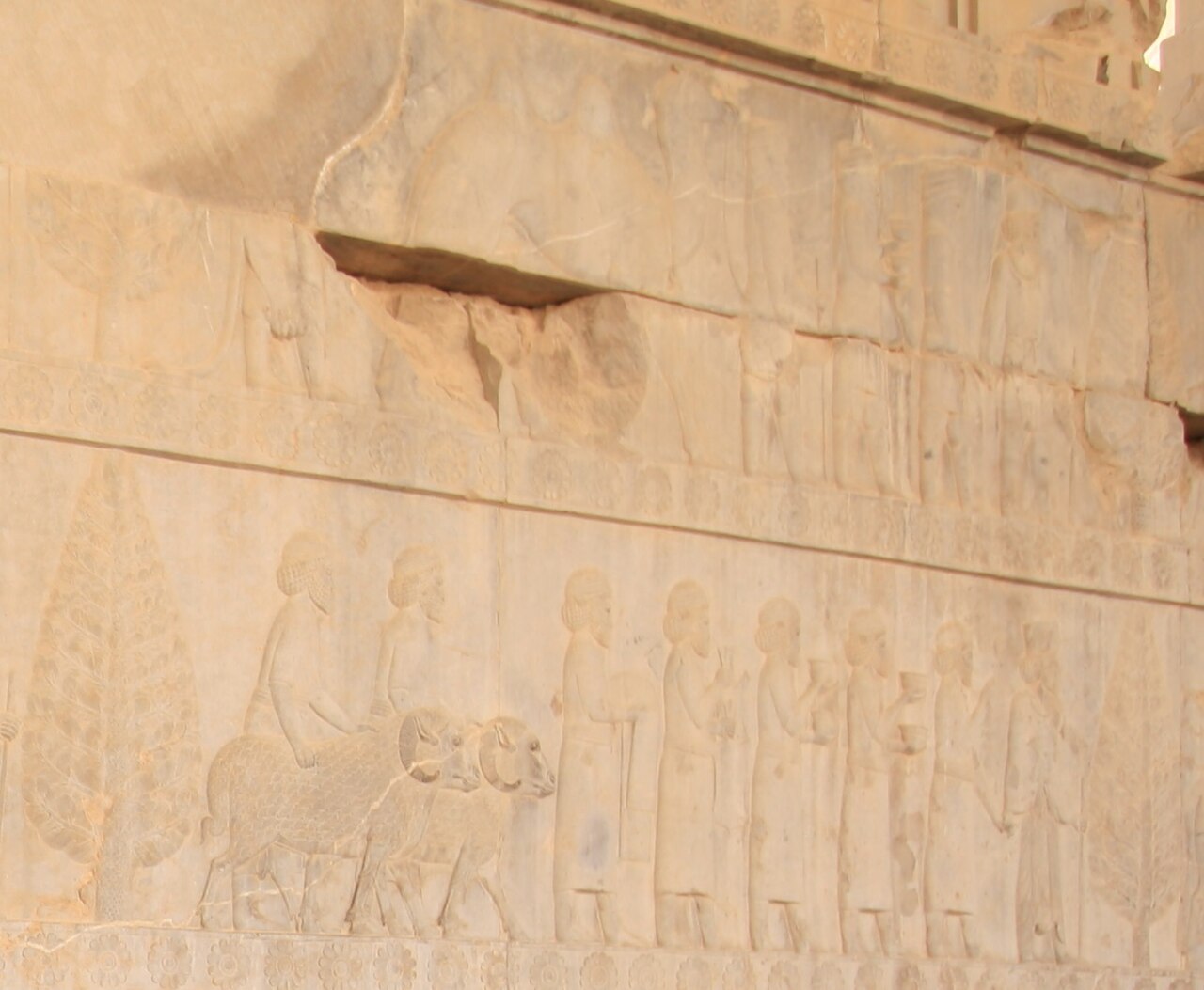
The famous reliefs of Persepolis depict delegations from different parts of the Achaemenid Empire presenting tribute. Medes, Elamites, Babylonians, Lydians, Egyptians, Greeks, and others appear in a carefully organized representation of the empire’s extraordinary cultural and geographic diversity.
The Getty’s Persepolis Reimagined digital experience further extends this approach by allowing audiences to explore a digital reconstruction of the ancient ceremonial complex.
Susa Reveals a Multicultural Persian Empire
Another major center highlighted by the history of ancient Iran is Susa, a city whose history stretches back thousands of years before its incorporation into the Achaemenid Empire.
Under Darius I, Susa became an important imperial center. Its palaces incorporated materials and craftsmanship from different parts of the empire, while glazed-brick decorations featuring lions, sphinxes, and royal guards demonstrated the sophistication of Persian monumental art.
Together, Persepolis and Susa reveal how Achaemenid rulers used architecture and visual culture to express imperial authority while incorporating traditions from many different peoples.
Art, Objects, and the Power of Representation
The story of ancient Iran is also preserved through thousands of surviving objects.
Gold and silver vessels, jewelry, seals, coins, textiles, sculptures, ceramics, and ceremonial objects provide evidence of the artistic, economic, political, and social life of ancient Iranian societies.
These objects were not simply decorative. Luxury goods and royal imagery could communicate wealth, status, religious beliefs, political authority, diplomatic relationships, and cultural identity.
Animal imagery, mythical creatures, royal scenes, hunting representations, and depictions of rulers appear throughout Iranian artistic traditions, providing researchers with important evidence about how ancient elites understood and represented their world.
One of the most significant aspects of ancient Iranian history is its relationship with neighboring civilizations.
Persian and Greek states fought major wars, while the later Parthian and Sasanian empires repeatedly confronted Rome. Yet conflict was only one part of these relationships.
Artists, merchants, soldiers, administrators, religious specialists, and other travelers crossed political boundaries. Artistic techniques and luxury goods moved between regions, while Iranian, Greek, Mesopotamian, Central Asian, and other traditions influenced one another.
Parthian art, for example, demonstrates the blending of Iranian traditions with Greek, Mesopotamian, and Central Asian influences.
This interconnected history challenges the idea that ancient civilizations developed independently. Instead, the ancient world was characterized by continual movement of people, objects, technologies, artistic ideas, languages, and religious traditions.
Religion and Cultural Transmission
Iranian religious traditions also contributed to wider cultural exchange.
The ancient Iranian deity Mithra became associated with the Roman mystery religion of Mithras, although Roman Mithraism developed its own distinctive beliefs and practices. The connection nevertheless illustrates the movement and transformation of religious concepts across cultural boundaries.
The Magi, Iranian religious specialists who served as advisers and priests, likewise became known in Greek and Roman sources as figures associated with ancient knowledge and religious expertise.
A Digital Window Into a Civilization Spanning Millennia
The importance of digital heritage projects lies in their ability to make complex historical material accessible beyond museums, libraries, archaeological sites, and academic institutions.
By bringing together information about monuments, artworks, archaeology, architecture, religion, and international cultural exchange, the Getty’s digital exploration provides a starting point for anyone seeking to understand ancient Iran.
The resource is particularly relevant at a time when digital technology is creating new ways for audiences to engage with cultural heritage. Virtual reconstructions and online collections can allow people who may never visit Persepolis, Susa, or major museum collections to explore their history remotely.
For students and educators, such resources can provide visual and historical context. For researchers and collectors, they offer another pathway into the study of Iranian art and material culture. For the general public, they provide an accessible introduction to a civilization whose influence extended far beyond the borders of ancient Persia.
Preserving an Enduring Cultural Legacy
The history of Iran cannot be reduced to a single empire, dynasty, religion, language, or artistic style. It is a complex story of continuity and transformation spanning thousands of years.
From Cyrus the Great and the Achaemenids to Persepolis and Susa, and from the Parthians to the Sasanians, the archaeological record reveals societies that were deeply connected to the wider ancient world.
Digital initiatives such as “Persia: Ancient Iran and the Classical World” provide new opportunities to examine that history and make its surviving evidence accessible to audiences around the world.
As interest in ancient civilizations, archaeology, cultural heritage, and digital history continues to grow, online resources dedicated to Iran’s past offer an increasingly important way to preserve, study, and share the legacy of one of the world’s great civilizations.
About “Persia: Ancient Iran and the Classical World”
The J. Paul Getty Museum’s “Persia: Ancient Iran and the Classical World” is a digital exploration of ancient Iranian civilization and its connections with the Classical world. Covering art, archaeology, architecture, religion, political history, and cultural exchange, the resource provides an accessible introduction to the Achaemenid, Parthian, and Sasanian periods and their enduring historical legacy.
Media Contact
Company Name: The J. Paul Getty Museum
Contact Person: Getty Museum
Email: Send Email
Country: United States
Website: https://www.getty.edu/art/exhibitions/persia/explore.html


