TSONT Highlights Key Considerations When Choosing Wholesale Lcm Liquid Crystal Module Factories
Shenzhen, Guangdong,China-September 23,2026
The demand for liquid crystal display modules continues to develop as manufacturers integrate visual interfaces into smart devices, industrial equipment, medical instruments, security systems, and other human-machine interaction applications. For buyers evaluating Wholesale Lcm Liquid Crystal Module Factories, product compatibility, display size, interface configuration, customization capabilities, manufacturing experience, and quality management can all influence sourcing decisions. TSONT highlights several considerations that buyers can examine when selecting a liquid crystal module supplier for different application requirements.
TSONT Focuses on Small and Medium TFT LCD Modules
Shenzhen TSONT ELEC. Co., Ltd. is a technology company based in Shenzhen, China, specializing in the research and development, design, production, and sales of small and medium TFT LCD modules. According to the company’s introduction, its product development includes display sizes such as 4.3 inches, 7.0 inches, and 10.1 inches, while its solutions are also used in building intercom applications.
TSONT’s products are used across a range of human-machine interaction applications. The company’s listed application areas include handheld devices, smart devices, smart homes, Internet of Things equipment, medical devices, baby monitors, building intercom systems, security access control, financial POS equipment, and industrial equipment. This range of applications means that display module selection can vary considerably depending on the intended device and operating environment.
For procurement teams, understanding a supplier’s technical focus is therefore an important starting point. Rather than evaluating a liquid crystal module solely by screen size, buyers can consider how the module’s resolution, interface, touch functionality, dimensions, and other specifications correspond with the final product.
Display Size Is a Primary Sourcing Consideration
One of the first factors buyers encounter when comparing Wholesale Lcm Liquid Crystal Module Factories is display size. Different electronic products require different display dimensions, and the available space inside the final device can directly affect module selection.
TSONT’s product portfolio includes small-sized screens, medium-sized screens, standard TFT LCD products, and touch screen modules. The company’s product listings cover a broad range of sizes, including compact displays as well as 7-inch and 10.1-inch modules.
The current product listings include examples such as 2.3-inch, 2.4-inch, 3.2-inch, 3.5-inch, 4-inch, 5-inch, 5.5-inch, 7-inch, and 10.1-inch display solutions. Some models also provide different resolutions and interface configurations.
For buyers, this range can be useful when developing products with different enclosure dimensions. A compact handheld device may require a smaller screen, while an industrial control panel or building-intercom system may require a larger display.
Interface Compatibility Should Be Evaluated Early
Display size alone does not determine whether an LCM can be integrated into a finished product. Interface compatibility is another important consideration because the display module needs to communicate correctly with the device’s main control system.
TSONT’s product listings include modules using interfaces such as MIPI, RGB, SPI, MCU, and HDMI/USB configurations, depending on the model. For example, the product range includes 5-inch 720 × 1280 MIPI-interface modules, 5-inch RGB-interface products, and a 10.1-inch module with an HDMI/USB driver-board configuration.
When sourcing from a wholesale liquid crystal module factory, buyers can therefore provide the required interface type at an early stage. Checking interface specifications before mass production can help reduce compatibility issues during product integration.
Resolution and Display Characteristics Also Affect Selection
Resolution is another factor that can influence the suitability of an LCM for a particular application. Higher-resolution displays may be relevant for products that need to present detailed graphics, text, icons, or interface elements, while more compact applications may use different resolution configurations.
TSONT’s portfolio includes various combinations of screen size and resolution. Its product listings include 3.5-inch and 3.6-inch round screens with 800 × 640 resolution, 3.4-inch and 3.5-inch square screens with 480 × 480 resolution, 7-inch displays with 1200 × 1920 resolution, and 10.1-inch modules with 1280 × 800 resolution.
The company also lists a 4-inch 480 × 800 IPS MIPI interface display with a stated 1000 cd/m² brightness specification. Such differences demonstrate why buyers may need to compare display characteristics according to the intended product rather than selecting a module based only on physical dimensions.
Touch Functionality Expands Application Options
Touch functionality has become an important component of many human-machine interfaces. Touch-enabled displays can combine visual information and user input within a single module, which can simplify the interaction structure of certain electronic products.
TSONT lists touch screen modules as one of its primary product categories. Its product portfolio includes touch-enabled displays in several sizes, including 4-inch, 5-inch, 5.5-inch, 7-inch, and 10.1-inch configurations.
For buyers, touch requirements should be considered alongside display resolution, interface, dimensions, and the intended operating environment. A touch module for a smart-home device, for example, may have different integration requirements from a display used in industrial equipment or a medical device.
Customization Can Influence Long-Term Sourcing
Another factor to consider when evaluating Wholesale Lcm Liquid Crystal Module Factories is the supplier’s ability to accommodate customized requirements. Display projects can involve specific dimensions, resolutions, interfaces, touch functions, brightness requirements, or driver-board configurations.
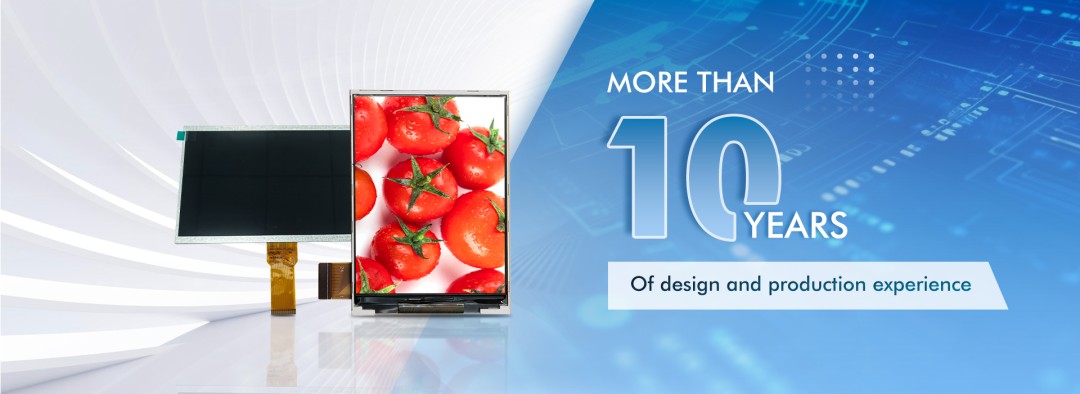
TSONT describes itself as a one-stop display solution provider covering display screens, touch screens, and driver boards. Its website also states that products can be customized according to requirements and identifies more than ten years of design and production experience.
Customization can be particularly relevant for manufacturers developing their own equipment or electronic products. Instead of selecting only from standard specifications, buyers may need to communicate project parameters with the supplier to determine an appropriate module configuration.
Quality Management and Production Capability Matter
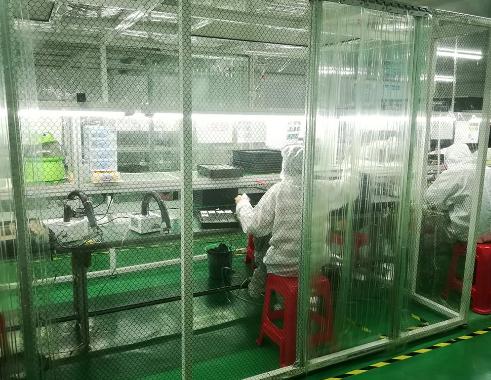
Quality management is another consideration when comparing display module suppliers. TSONT states that it implements an ISO9001 quality management system and has professional personnel covering display module R&D, production management, and technical functions.
The company’s website also describes automated production equipment, inspection equipment, and experienced professional management personnel as part of its production capabilities.
For wholesale buyers, these factors can be relevant because display modules are often purchased in quantities and integrated into products that may require consistent specifications across production batches. Quality management processes and inspection capabilities can therefore form part of the supplier evaluation process.
Industry Applications Shape LCM Requirements
Different industries can place different requirements on liquid crystal modules. TSONT states that its products are used in medical devices, smart homes, IoT equipment, security access control, financial POS systems, industrial equipment, handheld devices, baby monitors, and building intercom systems.
This application diversity highlights the importance of defining the end-use environment before selecting a module. Buyers may need to consider factors such as display size, resolution, interface, touch functionality, brightness, mechanical dimensions, and driver-board requirements according to the specific application.
For example, an industrial control interface may prioritize integration and readability, while a handheld device may place greater emphasis on compact dimensions. A building-intercom application may require a different combination of screen size, touch functionality, and system compatibility.
TSONT’s Approach to LCM Manufacturing
TSONT was established in Shenzhen and has developed its business around TFT LCD module R&D, design, production, and sales. The company states that it has established long-term cooperation with a number of manufacturers and receives support from domestic and international LCD glass and IC manufacturers. Its company page also lists partners including AUO, BOE, CMI, CPT, Himax, HSD, ILI, INNO, Novatek, and ST.
Its current product structure covers standard TFT LCDs, small-sized screens, medium-sized screens, and touch screen modules. The product catalog includes both standard models and configurations with different screen sizes, resolutions, interfaces, and touch options.
A Structured Approach to Choosing an LCM Factory
For buyers researching Wholesale Lcm Liquid Crystal Module Factories, supplier selection can begin with a clear specification list. Screen size, resolution, interface, touch requirements, mechanical dimensions, brightness, application environment, and quantity should be identified before comparing available products.
The supplier’s R&D capability, production experience, quality management system, inspection equipment, customization capacity, and product range can then be evaluated alongside individual module specifications.
TSONT’s product portfolio demonstrates how different display configurations can serve different applications. With small and medium TFT LCD modules, touch screen products, driver-board solutions, and customization options, the company provides a range of configurations for manufacturers developing products that depend on visual human-machine interfaces.
As display technology continues to support smart devices, industrial equipment, medical products, security systems, and connected products, choosing an LCM supplier requires consideration of both technical specifications and manufacturing capabilities. A structured comparison can help buyers identify a module configuration that aligns with their product design and production requirements.
Official Website: https://www.tsont.com/
About us
Shenzhen TSONT ELEC.Co.Ltd. Was established in Shenzhen, a leading science and technology city in China. It is a technology company specializing in R & D, design, production and sales of small and medium TFT LCD modules.
Media Contact
Company Name: Shenzhen TSONT ELEC.Co., Ltd.
Contact Person: Media Relations
Email: Send Email
Country: China
Website: https://www.tsont.com/


